Thursday, 14 October 2010

#37 Anyone for tea? (Part II: The funny part)


America would be a much better place if they drank tea. I realise this is an obvious argument for a Brit living in America to make, but hear me out.

In Britain - indeed, over much of the world - tea serves a crucial social function. You immediately offer it to visitors, and not just esteemed visitors - workmen and tax collectors.

You drink it at work, in a social way. People do tea runs. And you take your turn. If you don't, people notice."She always has a cup but never makes it." Just me? I've thought that at every British office I've ever worked in.

It is a complicated exercise in reciprocal altruism. Remembering who takes milk, and sugar, and how much, and in which mug - it is a small, but significant olive branch. It smooths office interaction. You notice that they notice that you notice that they like the purple spotty mug, a little bit of milk and one spoonful of Splenda. You both smile at your mutual noticing.

Not so with coffee. It's probably a frequency thing - you can't knock it back. People tend to drink it at very different rates. Some people - seriously, I've seen them - only have one cup all day. All day long. One cup. What the fuck do they look forward to in the afternoon?

So people make their own. Some people go out to buy it. In the latter case, they will offer to get one for you, but it isn't the same. Because they are going somewhere to buy it, there are no surprises - no secretly stashed biscuits, or unmentioned slices of birthday cake that suddenly appear to office-wide cheers. The situation is socially ambiguous, since they are spending real money - do I give them money beforehand? Do I pay them when they get back? Do I just buy their next one? But Sally has two extra shots and caramel syrup, hers costs $5! That's another thing - it's much more expensive. A tea bag I'm happy to write off, I would really care if someone didn't return a Double Chocamochachino-shaped favour.

Where Brits have social cohesion, Americans have social anxiety. Where Brits have hydration, Americans have one cup - all day long. Where Brits have their favourite mug, Americans have a disposable cardboard/plastic amalgam that insulates against heat. What the fuck is that about? I want to cradle my warm cup in my hands to get me through dreary winter days at the office. I don't want a lukewarm lump of cardboard held at arms-length. There is no emotional connection with that.

And here's the worst part: on occasion I go to Starbucks, or a similar establishment, to sit, and drink, and read. Maybe work. Probably just read. I've done this in England for years, especially during winter. I blame the sofas. Well, if you sit in Starbucks in America, they do not -repeat: DO NOT - give you a mug. You sit, cuddle up in your winter coat and scarf in an outsized purple armchair, thumbing through a Jane Austen novel. And you have to suffer the indignity of drinking out of a lukewarm lump of cardboard.

#36 Anyone for tea? (Part I: The angry part)


I always fear that creation will expire before tea time.

-Sydney Smith.

On December 16th, 1773, tea time was interrupted for the British East India Company. Three shiploads of tea ended up in the Atlantic Ocean at the mouth of the Charles River - an event which became immortalised as the 'Boston Tea Party' (and, if I may say so, a crying shame - just because of the wasted tea, you understand).

For the previous two decades, opinion across the Thirteen Colonies had been fomented against 'taxation without representation'. The central tenet was that, since colonists (who were British citizens) had no elected representatives in Parliament, they shouldn't be subject to Crown taxes. Seems fair.

The repeal of most taxes on imports to the colonies in 1770 subverted the unrest, but a tax on tea (to the tune of thrupence on the pound) remained. However, the tax wasn't crippling and, since the colonists were pragmatists with little pretension to self-governance, it was swallowed.

In 1773, a new Tea Act was tabled. Did it restore the huge levies on tea imports? No. And, in fact, it made it easier and cheaper to sell British tea in America. A number of signatories to the Act - under the auspices of the East India Company - would be allowed to sell tea directly in America, with smaller levies. The trouble was, it made it much harder to sell illegal Dutch tea, and it debarred many 'unauthorised' British vendors - who until recently had been doing swift trade - from their trade. Essentially, the Tea Act created a monopoly.

'Taxation without representation' was still a prominent strain in (or at least a justification for) the ensuing civil unrest, but many of the instigators were tea merchants who felt hard done to. For all the calming influence of tea, it did start the most important independence movement in history.

The tea was blue touch paper. Sort of. Through various leaders and revolutionaries, from the mobbish to the principled, an independence movement arose, which eventually garnered the support of an estimated 40% of colonists. The movement was not without its detractors: Benjamin Franklin immediately ordered that the East India Company should be reimbursed for the tea. Several East Coast merchants sought conciliation with the Crown. Many colonists supported representation in Parliament, and few thought America could self-govern successfully, until well into the war. Like so many celebrated historical events, the Tea Party and ensuing War of Independence were less glamorous than posterity considers them.

Nevertheless, the Tea Party was clearly A Good Thing in terms of its achievements - the first government 'of the people, by the people, and for the people', as Jefferson later put it, that the world had ever seen.

The Boston Tea Party has come to the political fore again of late, because of the growing 'Tea Party' movement in America, that pushes a diffuse antigovernment, rightwing agenda under the vague justification of suffering the same executive injustice that the colonists did.

Well, maybe. The prima facie case is laudable - government has become bloated, unaccountable, and profligate. And it's true, to an extent. The problem with it is the problem with all causes cèlébres - it's not as simple as all that. The Boston Tea Party wasn't about high taxes stifling business - it was about trade restrictions harming business. And no American can claim taxation without representation, without paying a significant insult to the colonists.

Especially, Mrs. Palin, individuals hailing from states ranking 47th in terms of people per electoral college seat. Only individuals from Wyoming, North Dakota or Vermont can claim to have more representation than you. You are worth THREE Californians, and don't you forget it.

Government restrictions don't harm US businesses - they allow them to compete. America has been criticised again and again by international observers for its protection and subsidy racket. A smaller government would ravage America's farming industry, for example. Maybe that's no bad thing, but it's hard to imagine that that is what those invoking the Boston riots really want.

Personally, I think it's just rude to misread history to push a particular agenda. And talking of tea etiquette...

Saturday, 18 September 2010

#35 Nothing comes close to the Golden Coast.


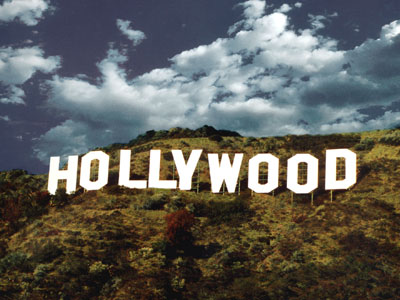
Los Angeles is the most divisive of tourist destinations. It's attractions are as big as they come: Hollywood, Malibu Beach, Venice Beach, the Sierra Nevada, and a clutch of unique wild places: Yosemite and Sequoia National Parks, the Mojave desert, and (casting slightly further afield) the Grand Canyon. Yet most people I have ever talked to loathe it. Why?

It is often criticised for being a cultural wasteland. On the one hand this seems absurd - Hollywood movies aren't always (or even often) stellar, but Hollywood has still given us hundreds of spectacular films. Name another city with as rich a cultural output during the latter part of the 20th century.

On the other hand, I know what people mean. Film studios do not a cultural landmark make, however culturally significant their output may be. Artists' studios and writers' desks are seldom particularly interesting. It is best to worship Hollywood from afar, curled up with a bucket of overpriced candy and a frisky *CENSORED FOR A BETTER AMERICA*.

And culture in a city is about way more than the arts. It's the jostle and the street fairs and the ethnicaly-mixed neighbourhoods, the farmers' markets and the lines outside clubs. It is the very density of cities that give them their vivacity. LA misses that, totally.

It feels like a wasteland as you fly in from New York. It is a flat, drab gray that stretches to the horizon, an overwhelming expanse of gray, unbroken by the striking relief that makes Manhattan so thrilling. There is no heart, there aren't even any organs - just an homogenous mass of gray tissue, deeply veined with eight-lane highways. These veins are hopelessly clogged: millions of blood cells (by which I mean cars: still with me?) crawl along them.

There are stories about the influence of the big American car manufacturers in the urban planning of LA County, and I can believe them. In a city with no reference points, no centre, and a woefully inadequate public transportation system, everyone is forced to drive everywhere. There is no 'let's walk around and see what we see' - attractions are miles apart. You drive to a destination - a theatre, a restaurant, a shop - then you drive away. The only way you can string together entertainments is by going to a mall (which you drive to, of course).

As a city with any identity, it's a non-starter. But as a tourist attraction? I thought it was great.

A couple of disclaimers: I was there very, very briefly (essentially for two days), and I worked for most of that time. A good-sized closet could have kept me busy for the amount of free time I had. I was on expenses, so the considerable cost of everything didn't bother me as much as it otherwise would have. We got taxis everywhere, and I'm good at sleeping in cars, so the urban sprawl didn't bother me. The weather was perfect (though that's part of the attraction of Southern California - the weather is mostly perfect). Finally, I was staying at a nice-ish hotel - I had little chance to experience the shocking wealth disparity LA is known for.

I went for a cycle around Santa Monica and Venice Beach. Everyone was friendly and unpretentious. There was a nice amount of quirky. The Pacific, of course, lies to the west, and the sunset was as sublime as it was visible. Though I would guess sunrise is equally visible, since the tallest thing in LA county is Jane Lynch.

I had a walk around downtown - the pitiful little collection of hotels and municipal buildings that vaguely approximates a normal city centre. It's quiet. Bizarrely quiet. To begin with, it felt unpleasantly quiet, having come from New York. On reflection, the space was refreshing. No one jostled you. You could have driven over to Vegas, stolen a tiger from Caesar's Palace, brought it back with you and swung it around liberally without hitting a soul. Maybe I will next time.

The restaurants were really very good (maybe people expect more, when they're driven for an hour to get there). Again, everyone was notably friendly. The tap water tastes absolutely amazing - once more, in stark contrast to New York. Seriously, they should bottle this stuff and sell it in New York. Models would snap it up.

Beverly Hills is good for a laugh. Never before has a place so exactly matched up my expectations. Drive along any of the major boulevards, and you will see, in order: a palm tree, a luxury condo block, a restaurant, a palm tree, a bar, a palm tree, a plastic surgery clinic, a luxury condo block, a palm tree, and another palm tree, in a repeating pattern for the next eight thousand miles.

I get the wasteland thing now. If you are remotely interested in anything other than comfortable, modest pleasure stretching until you are 100 (and look only 90!), you shouldn't stay. It must be so boring to be there for an extended period. But I'm definitely going to go back. After all, I didn't meet Taylor Townsend from the OC, which was the primary objective.

Tuesday, 14 September 2010

#34 Pop art.


To anyone who says America is a culinarily unsophisticated nation, I put it to you: there are 27 flavours (flavors) of Pop Tarts.

(The image is from Rejected Pop Tart Flavors.)

#33 Brace yourselves.


The myth (in my case, read 'myth' as 'gospel truth') that British people have bad teeth arises from the fact that Americans are obsessed with braces. Literally obsessed. For a nation with no particular penchant for public transport, their appetite for slapping train tracks into the mouths of any unsuspecting, otherwise-attractive children is rapacious.

The world's nations spend their wealth on different things. Some, like Israel, develop state-of-the-art militaries; Ireland went for stout beer. Britain chose to have MPs, and America plumbed for dental care.

America has a mainly brace-based economy. Taken alone, America's annual expenditure on dental care exceeds the GDP of Slovenia. Not really. I just made that up. I couldn't find a number and I'm pitching to become a Fox News reporter. But it's probably in the ballpark. After all, this is a country which spends 16% of its GDP on healthcare, nearly four times the already-unimaginable amount they spend on guns.

Why? It seems incongruous. Braces, in most instances (or at least, mot of the extra instances in which Americans use them, and Brits don't), are a basically cosmetic consideration. That seems to fit, you might think - America is so shallow. You clearly haven't been listening to my stream of consciousness over the past six months. Two words: 'obesity' and 'fashion'. When you are so spectacularly bad at being attractive in so many fixable ways, why spend tens of thousands of dollars making yourself look like a bunny rabbit?

Saturday, 11 September 2010

#32 The Bloods and the Crips and the KKK.


Lil Wayne, sporting typical gang tats

I've tried playing Dizzee Rascal to several Americans. They just break down laughing. "Do people actually listen to this?" "Yes," I patiently explain. "Rap doesn't have to be about booty and firearms." "Is that really how he talks?" And so on ad infinitum.

The truth is, America just does cool a lot better than we do. To name a genuinely cool British recording artist, I think we have to go back to the Stones.

They do gangsters better, too. Sometimes I think we can't do anything right. Dizzee Rascal doesn't drink, for God's sake. Our toughest gangs - Nottingham and London's yardies - just aren't a patch on the Latino and black gangs over America's great cities. Ours shoot hoops; theirs shoot hos. I am officially declaring my authorship of the phrase 'SHOOT HOOPS NOT HOS' - coming to a Camden t-shirt stall near you very soon.

Well, a few weeks ago I had the fascinating experience of meeting some of America's toughest gangsters, when I visited a county holding facility on Long Island.

Now, most of the inmates we're two-bit crims. America has a system known as 'three strikes and your out', which on the surface looks like a sensible way of dealing with low-level antisocial behaviour, but in reality leads to jails being filled to bursting with men on five-year stretches for stealing a candy bar. It's nuts. America locks up about 0.75% of its population, or nearly five times the number we do. To give you a whirlwind of comparisons: that's 50% more than Cuba, 200% more than South Africa, and 300% more than Iran.

Is it working? Who knows. America has three times Britain's murder rate, but then it has many more densely-populated cities, more unemployment, more racial diversity, and (I'm just putting it out there) a lot more guns.

Anyway, without wishing to make any political points, incarceration is as American as apple pie. A young black man is more likely to go to prison than college.

Backdrop painted, what the hell was I doing there? Howard (my boss) is doing a pro bono project with the Council for Unity, a sort of 'Cons Anonymous' self-help group that ambitiously aims to paper over some of the gaps left by America's skeletal social welfare system. They provide educational opportunities within prison, and a support network on both sides of the bars - which aims to tackle the chronic problem of reoffending. Unsurprisingly, cons who leave prison with records, no skills and no family or friends tend to return to prison fairly quickly. There's a bit too much God bothering but it's a great scheme that I was happy to help with.

And while we were there, we also got to photograph some of the 'harder' inmates - mostly not part of the Council for Unity, since (I hypothesise) that would break with gang etiquette (and since they are mostly in for life). America's toughest gangsters sport tear drop tattoos which indicate various things depending on their exact form: usually either murders committed, family or friends lost to murders, or years behind bars. Well, the guys I met had dozens - I counted six on one guy alone - sitting under dull, thousand-yard stares. One of them, I was told afterwards afterwards, was the New York head of the Latin Kings, the most notorious of America's Hispanic gangs. (The Kings, incidentally, tell a story of the genesis of gang culture: they started as a legitimate civil rights organisation, then drifted.)

Meeting murderers and rapists is a bizarre exercise in normalisation. They are normal guys. They make jokes and say hello to you and eat fried chicken (I tried their food, by the way, and it was grim). There was something intangibly dark about the long-term inmates, but then there's little surprising about that. The guards communicated how difficult it was to me. "I get along with them, but I have to remind myself...they've done horrible things." There is a very real need to compartmentalise - otherwise you would be frantic - but a danger of going too far.

Thursday, 19 August 2010

#31 The Gettysburg Largesse.


I spent a lot of time with my parents a couple of weeks ago. Among other places, we went to Gettysburg, the scene of the decisive battle of the American Civil War, and where Abraham Lincoln famously gloated about how great the Union was. We ate stacks of pancakes and waffles and ice cream, and I grew fat.The Gettysburg Address, and the Gettysburg Largesse.

The civil authorities of Gettysburg clearly know which way their bread is buttered: the whole town is built around the civil war. Every civil war-era house has a spiffy plaque proclaiming it as such; every other shop sells civil war costumes. There is a big market for said costumes amongst civil war re-enactors, who, in Gettysburg, are plentiful. I am curious as to whether anyone who isn't a civil war re-enactor has ever bought one, and whether, if so, he was drunk. On the better side, we went to a restaurant which served civil war-era food. I know not how genuine it was, but it was certainly scrumptious: game pie, sweet potatoes, watermelon jelly, apple butter, and so forth.

The most amazing thing about the American Civil War is how close a call it was. I know people say that about every war ("If only Hitler had continued bombing airfields/kept Stalin sweet for another month/not fired that nuclear technician/warn Swastika underpants..." my history teacher used to opine, with a hint of genuine sadness), but really, you couldn't put an Avanti condom between the Union and the Confederacy until Gettsyburg. The consensus was that Robert E. Lee (Commander of the Army of North Virginia, and the de facto head of the Confederate army) nearly had it, after major victories preceding Gettysburg. It was a truly unexpected tits-up for the Rednecks.

I like this topic a lot, as it allows me to exhibit a rare flash of Mancunian pride - the Union almost certainly would have lost the Civil War, if the City of Manchester hadn't agreed to stop buying Southern cotton. The loss of the South's major - almost only - source of income was disastrous for the Confederacy, and greatly undermined their military power. Abraham Lincoln wrote a humble letter thanking Manchester's workers, who suffered widespread hardship and famine throughout the rest of the war.

As I alluded to earlier, Gettysburg is, astoundingly, where the Gettysburg Address was given. Five months after the bloodiest battle the Western hemisphere has ever seen (in terms of the proportion of soldiers involved who perished, if you were wondering), as bodies were still being cleared away, he stood and spoke the following words to a 15,000-strong crowd:

"Four score and seven years ago our fathers brought forth on this continent a new nation, conceived in liberty, and dedicated to the proposition that all men are created equal.
Now we are engaged in a great civil war, testing whether that nation, or any nation, so conceived and so dedicated, can long endure. We are met on a great battle-field of that war. We have come to dedicate a portion of that field, as a final resting place for those who here gave their lives that that nation might live. It is altogether fitting and proper that we should do this.
But, in a larger sense, we can not dedicate, we can not consecrate, we can not hallow this ground. The brave men, living and dead, who struggled here, have consecrated it, far above our poor power to add or detract. The world will little note, nor long remember what we say here, but it can never forget what they did here. It is for us the living, rather, to be dedicated here to the unfinished work which they who fought here have thus far so nobly advanced. It is rather for us to be here dedicated to the great task remaining before us—that from these honored dead we take increased devotion to that cause for which they gave the last full measure of devotion—that we here highly resolve that these dead shall not have died in vain—that this nation, under God, shall have a new birth of freedom—and that government of the people, by the people, for the people, shall not perish from the earth."


Without wishing to get drippy, standing and reading those words of peerless beauty and eloquence is a pretty amazing moment. And when you're done, you can go and get your photo taken groping a bronze statue of Lincoln in the crotch.