Sunday, 16 January 2011

#44 Being a massive tourist.


...and back to New York, for the last time.

It is a fact I still find breathtaking: more people visit London each year than New York. Except that they don't, really, because over three quarters of New York's 45 millions annual visitors are domestic, and the commonly-cited figures consider only international tourists. So pipe down London.

The truly breathtaking number is this: New York, as isolated as it is from other countries (only East Coast Canadians are close), receives nearly ten million international visitors every year. The vast majority of those people fly for five hours or more to see Lady Liberty through their airplane windows. That's commitment.

It's testament to the reputation - part puff, part deserved - of the Big Apple. Only Paris could claim to be nearly as fixed in the popular imagination. And, as Doug Stanhope put it, "Fuck the French".

I had two weeks to spend in New York after finishing work. Since my departure was ahead of schedule, I'd neglected a lot of tourists 'musts', so I bent to it.

Less of a blog post, more of a love in.
If you wanted hard-hitting journalism, you've come to the wrong place. By which I mean Blogger generally, and specifically this blog, and specifically this post. Almost everything I did in my last few days was wonderful. Almost.

First, stop making excuses and go to Shake Shack. It's fucking spectacular. Cheesy fries, a cheeseburger of some kind and, of course, a milkshake, are a bare minimum. I went for the vibrating burger that tells you your order is ready; I stayed for the taste (and I really didn't expect to).

While we're on food, check out Sarabeth's West for the best Bloody Mary's this side of the Tudors.

The Met Cloisters feel like an odd visit as a European: why travel 4,000 miles to visit a museum of Mediaeval European art? Well, because it's spectacularly well-curated, laid out around a mocked-up monastery to put the art in proper context, and because the gallery tours are excellent.

Top of the Rock? Well, that was the 'almost'. It's okay, if you like that sort of thing, but pretty much exactly what you would expect. The short museum in the base is quite interesting...

I went back to the MoMA. It's still great. The current Abstract Expressionism exhibition is particularly amazing for the fact that it draws entirely on the MoMA's collections - which shows quite how important the institution is to modern art. Andy Warhol's films, though, are much more interesting in concept than in practice.

The American Museum of Natural History is as good as ever, though they let me down.

Finally, Ellis Island:

a) is much better if you aren't conned into getting the worst audio guide ever.
b) teaches you more about America than any other museum I've been to.
c) needs a queuing system that doesn't involve Stage I hypothermia.

The gaps were filled with a gooey assortment of regional and international foods, outdoor sites (the Brooklyn Bridge, Central Park), and topped off with spectacular pie from Four and Twenty Blackbirds (of Park Slope - look them up, and try the Salted Honey), and milk from Momofuku Milk Bar.

In summary, I'm a fat fucking pie, and I can't believe I'm no longer in the best city in the world. But I'll be back.

Check out my website for a new blog in the next few days.

Sx

Saturday, 8 January 2011

#43 Our Nation's Show Home


I hate feeling like a tourist in America. Obviously, given my perfect vowel formation and undropped aitches (ZING!) I stand out as English, and I've make a point of correcting people. "Actually, I live in New York," I say. In case you were finding it difficult to imagine what my corrections were like.

Why? I suppose it's because I'm terribly afraid of seeming ignorant - even when I am. Because I have winced time and again at the obnoxious and erroneous foreign tourist, and I want to maintain the moral high ground by not being lumped with the tourist riff-raff.

As an aside I have two annoying tourist anecdotes. The first comes from a teahouse in Nepal, where a couldn't-help-overhearing-four-tables-away loud American addressed his fellow diners:

"Do you know what the difference between a spice and an 'erb is?"

...

"An 'erb is a leaf. And spice is a seed."

...to which my group of Cambridge scientists mouthed the word 'cinnamon' and snickered into our port glasses.

The second occurred only a few days ago, as I toured the Mediaeval art of the Metropolitan Museum's Cloisters. A mother, looking at an illustrated family tree of Jesus Christ, gripped her about-six-year-old's hand tightly:

"But we don't need proof because we believe, don't we?"

Their nation's capital

So I finally made it to Washington DC - a last-minute trip that denied me my normal reading and preparation time. Given the aforementioned reticence to appear stupid, my friend and I (she is similarly shy) followed various people around in the vague hope they were heading towards sights. (Obviously, we chose likely targets - men holding SLR cameras, and anyone Asian.) So the first day was a rather esoteric tour of Capitol Hill.

In the evening we picked up a cornucopia of tourist bumf - I've never written that word down and always wondered how to spell it; thank you Google - and educated ourselves.

It turns out there's quite a lot to see in DC. The Smithsonian Museum network is the biggest (perhaps 'most monumental') monument to public erudition in the world. If the British Library, the British Museum and the Natural History museum all moved to the same block, it still wouldn't compare because things like Dorothy ruby red slippers (which were originally supposed to be silver), the original Kermit the Frog and the biggest ballistic missile ever built wouldn't be on display. The National Mall is the Mecca of museuming, except you don't have to be American to be let in. And it's free.

I was impressed, at almost every turn. I was impressed by a photograph of Elvis with Richard Nixon. I was impressed by a whole exhibition on Abraham Lincoln. I was impressed by a life-size crochet coral reef. I was impressed by the blistered and blackened heatproof tiles on the front of the Apollo re-entry ship. I was unimpressed by the Hope Diamond, to be honest, but I seemed to be in the minority.

Most of all I was imbued with a huge respect for the tangibility of American history. Of course recency is a factor, but it's more than that. The air hums with an implicit understanding of what America is all about, and everything her sons have achieved. It's all in the geography of DC. I think they should redub it: not 'Our Nation's Capital', but 'Our Nation's Show Home':

"...and on your left, you will see the likenesses of the handful of people who created our government - the only stable revolutionary government in the world. On your right, notice the unrivalled contribution of America to the 20th century's popular culture. Along the corridor you'll see the world's biggest library, containing 22 million books covering the whole of recorded human history. Stop by our collection of moon landing craft on your way out!"

In 1779, the nascent American government decided not to turn to an established city (New York or Philadelphia being the likely candidates) for their new capital. Instead, they holed up in Philly for ten years whilst building one from scratch. As such, the place is laid out in pleasing Germanic order: on Capitol Hill the legislature and judicial branches face each other in resplendent Neo-Classical glory, and just down Pennsylvania Avenue the Executive - or Barack, to his mates - is within easy reach. The Washington Monument, a mesmerising obelisk (and the tallest freestanding stone building in the world, apparently, though I find it hard to believe) completes an elegant right-angled triangle. Philadelphia and New York are hardly disordered, as I have noted previously, but DC would make an obsessive-compulsive cluster-orgasm.

If you shook America over a bit white rug, the contents of Washington DC is what would fall out. I sort of suspect that's how they did it. Travellers, including me, search vainly for the 'real country', the 'real city'. Well, America had the foresight to summarise everywhere and everything else in DC as they went along. In DC, America is your oyster, and the half-shell is clutch of free-to-access civic buildings. That analogy didn't really work, did it?

Just go, please.

Friday, 31 December 2010

#42 And now for something completely different.


Fourteenscore and seven days ago I brought forth upon this website a new blog, conceived in comedy, and dedicated to the proposition that I can write funny.

It's important to remember that that was it. Excusing the odd bit of forgettable political rhetoric, the purpose of this blog was entertainment. Whether I have achieved that purpose is not for me to say - ask one of my ten readers. But the aim was benign, or even benevolent.

I'm making the point for three reasons:

1. Because it has been suggested, reasonably, that my Lettuces From America comes across as anti-American.
2. Because I wish to deviate for this one post from comedy.
3. Because my time in this great nation is coming to an end.

On the last point: I leave in a week. (To wit: I have been offered a job in London that precipitated the difficult and swift decision to move.)

And so, to deviate, what follows in not especially funny, and is aimed at an American, as well as a British, audience.

Why I love America

Over the past ten months, I came to understand patriotism. Or, at least, love for a country. I still think it's slightly silly to be proud of the geographical accident of your birth. But insofar as your nationality leads to your being associated with the values of your nation, I suppose it makes sense.

The problem is that I fell in love with the wrong country. I can claim some allegiance to America - my grandfather and his parents were American citizens, and I have lived here for the best part of a year - but calling myself 'American' would be a stretch. So why am I in love? Why, especially when all appearances were that I scorned the place?

The love is simple: America was founded on the most laudable principles of any nation state - freedom, equality, and an overarching faith in man and his ability to self-govern. Britain still hasn't got there. France took five attempts to get it right. Yet America, a fledgling nation with very little in the way of power or resources, nailed it first time. This was in part the work of a cohort of public-spirited and prescient heroes: George Washington, John Adams, James Madison, and Thomas Jefferson, to name a few. The Continental Congress took a ragged bunch of thirteen British colonies and built the greatest nation in history.

America delivered on this foundation as it accepted the poor and disenfranchised citizens of the world through the 19th and 20th century not as charity cases, but as citizens and equals. Obviously it lost its way from time to time: the xenophobic Immigration Acts of the early 20th century, the slow progress of the Civil Rights movement. But by and large Americans have spent the last two centuries making good on the promises of their Constitution. E pluribus unum.

So why am I so down on it?

The negativity heretofore expressed reflects my feeling that this is a country falling far short of its potential - which, given its power and its principles, its pennies and its people - is surely the greatest of any nation on this earth. When you're good, America, you're very good, but when you're bad you're bloody awful: the armchair fundamentalism and kneejerk conservatism, the callousness of foreign and domestic policy. For a year I have seen a nation wilfully allowing a great many to piss on its proudest principles. And it saddens me.

My polemics were aimed at many Americans, but never America.

So if these blog posts have offended,
Think but this, and all is mended:
That the love is greater here,
Than it did at first appear.
And these weak and idle themes
Were no more than angry scream,
Yankies, do not reprehend:
If you pardon, I will mend.
And, as I am a humble Brit,
If you felt my yarns lacked wit,
If you scorned my serpent's tongue,
Know this blog will close 'ere long.
Else Palin a liar call;
Happy New Year unto you all,
Though I mock Americans,
I sure wish I was one of them.

A round-up of my last few days in New York and Washington DC will follow, but I'm basically done. If you've enjoyed Lettuce From America, check out my new blog in 2011. And to my very small readership: thank you, sincerely, and have a wonderful year. I hope you got even a tenth as much out of reading this blog as I got out of writing it.

Sunday, 26 December 2010

#41 A Kwanzaa cash-in has no place in the Milstein Hall of Ocean Life

Below is an unedited version of a note I just sent to the American Museum of Natural History. The Museum's wonderful Milstein Hall of Ocean Life - which forms a major part of probably the best life sciences collection in the world - was almost entirely obstructed on 26th December by temporary stalls coinciding with the Kwanzaa festival. It was the gallery I was most excited about seeing - I don't know if I'll have another chance - so I was fairly upset.

Notably, this closure was not clearly indicated on the Museum's website, nor was it explained at admission.

Dear Sir or Madam,

I attended the Museum on 26th December 2010. Being a biological sciences graduate, I was particularly excited about visiting the Ocean Life room.

However, most of the area was blocked off by temporary erections for Kwanzaa. This would have been acceptable, except that these erections weren't exhibits - rather, they were commercial stalls. No warning was given at the front desk when purchasing tickets that a whole hall of biosciences exhibits were closed off. And would the African Peoples gallery not have been a better location for Kwanzaa-related stalls?

I love the museum dearly, and think the collections are wonderfully curated. To close them off for commercial purposes is an affront to the educational purpose of the Museum.

I am copying this note to my blog, at http://lettucefromamerica.blogspot.com.

Thank you for taking the time to read this. Yours sincerely,

Samuel Palin


Why have I copied this here? Partly to publicise what I believe to be a very poor curatorial decision, and partly to highlight a distinctly British form of complaint: the strongly-worded letter.

Anyway, if you're with me, please tell the AMNH through their online email system.

Sunday, 19 December 2010

#40 Thanks: given.


Tryptophan doesn't kill you, spectacular overindulgence does.

An oft-heard gem at this time of year is the assertion that the high levels of tryptophan in turkey - which actually aren't any higher than other meats - are responsible for the post-prandial miasma that falls on Thanksgiving and Christmas. The theory has gained traction, perhaps, because it allows Middle America (which I finally found, incidentally -see below) to blame their subconscious stupor not on their colossal calorie intake - which leads to all sorts of nasty thoughts about diets and jean sizes - but on biology beyond their control.

It's sort of like when people blame their irritating personalities on lack of sleep. "Sorry, woke up on the wrong side of bed this morning!" she opined with a winning smile. "Nope, you're just a poisonous, undersexed little bitch!" I replied sweetly.

Anyway, I did Thanksgiving- my first Thanksgiving - in Ohio this year. Ohio can be characterised as 'middle America' for all sorts of reasons. Politically, it is the 'barometer of the nation' - a key swing state where traditional, modern, rural and urban mix. There are huge state colleges and windswept corn fields, small towns and big cities. Stars and stripes billow elegantly in the cold wind, and SUVs doze on driveways.

The whole notion of 'middle America' seems elusive and vacuous, until you go to Ohio. Bill Bryson, in his 'Notes from a Big Country' (or 'I'm a Stranger here Myself', as published in America), searched for Amalgum, USA - his ideal small American town. I don't know whether I'd call it ideal, but Amalgum would be a good surrogate name for Dover, Ohio.

The meal

Brits and Americans have a long and colourful history of antipathy on the subject of food. Americans decry bad British food, despite many of their staples originating there, and despite the fact that Britain is home for far more restaurants of international note than America, a country with five times the population and forty times the land area.

In turn, Brits mock, misrepresent and out-of-hand dismiss a variety of US delicacies, from the Turducken to the Krispy Kreme burger.

It was within this shroud of skepticism that I arrived for Thanksgiving, armed with British seasonal delicacies - flapjack (the British oat tray bake, not the American pancakes) and parkin. My hosts steeled themselves. In turn, I hunkered down to take on deep-fried turkey, baked corn, noodles and pumpkin.

Deep-fried turkey is to dining what Brasseye is to comedy: very out there, but unquestionably brilliant. 45 minutes in hot oil rendered our 12lb turkey crisp-skinned, tender and moist - the best turkey I've ever had, in fact. I heartily recommend it. Do be careful, though - it's terrible dangerous.

Every other constituent of Thanksgiving food is a variation on a basic theme: sweet carbohydrate. There are all, to a dish, glorious. This includes the desserts: pumpkin pie, pumpkin ice cream, key lime pie, key lime ice cream - almost anything in pie or ice cream form.

My foods, for what it's worth, went down modestly well. Flapjack was misinterpreted as a breakfast food, because it sort of resembles a granola/cereal bar...except that it's far more sugary and buttery. Which says a lot about the American palette.

There I went, being a mocking Brit again. Really, I have nothing but praise for the gastronomic genius of the country that brought us both the Krispy Kreme burger and sweet potatoes baked with marshmallows.

And the rest

It's just a lovely idea, isn't it? A nice, secular holiday that is just about being thankful for the people around us, our wealth, the fat of the land.

I was. We were. Fuck Boxing Day.

Saturday, 27 November 2010

#39 Bet you didn't know I don't care!

There exists a corpus of 'facts' which aren't really facts, proffered with the pride and enthusiasm of the know-it-all, but without the 'know'. I refer to statements like:

'Did you know that tomatoes aren't vegetables?'

and

'Did you know that the Great Wall of China is the only man-made structure visible from space?'

and

'Did you know that you lose 3,000% of your body heat from your head?'

They are irritating because of the smug way in which they are delivered. Often 'I bet you didn't know...', in fact, rather than 'did you'. The assumption of superiority - an insight which the lesser interlocutors lack - grates jarringly.

Perhaps they upset me especially because I see myself in them. Through my youth - and no doubt, in my ignorance, today still - I have been and am a purveyor of such 'facts'. I remember telling people how fungi are animals when I was a child, and I blame Dorling Kindersley.

Incidentally, the fiercest fuel for these insufferable know-it-alls is QI (the British television show). It is a whole programme dedicated to often spurious facts, and watched partly for its comedy, but not insignificantly for the ammo it give viewers to throw arrogantly at unsuspecting dinner party guests.

It doesn't really matter if that facts are true - or accurately represented - or not, because your colleagues are unlikely to have much knowledge of the finer points of Shakespeare's scatological habits, and so are unlikely to mount a defense. You can bask in the warm glow of superior insight into some minutiae, and surely your friends will drink in the incomparable wit of your company. Never admit you got the fact from a TV show, of course, and try to weed out others who may have watched. The key is convincing everyone that your knowing that Amazonian custard frogs are the only animals other than humans to conduct full ritual burials fits into your wider knowledge of custard frogs, or the Amazon -but a piece in the monumental puzzle that is you.

This was going to lead into something, but I've gone so far off-topic I'll make a separate post. It's not even about America, for shame.

(Incidentally, all of the statements I proffered at the start were false, though I know nothing for sure about the burial rituals of custard frogs.)

Friday, 19 November 2010

#38 Christmas is coming, the goose is getting sadly replaced.


Britons bemoan the iterative expansion of Christmas. From one day of family cheer, nearly two months of commercial reverie has grown. Well, as the eunuch flasher said, you ain't seen nothin'.

My first winter in America beckons, and the simple truth is this: nobody does it better. It's all about the spacing of holidays. (And, I suppose, the bloodthirsty rapacity of unrestrained capitalism, but I'm picking my battles.) Halloween - which is about as big a deal here as the Second Coming - segues neatly into Thanksgiving, which serves as a teasing prelude to Christmas. From mid-October until New Year, middle America can justifiably say that it is 'holiday season', and stuff its collective face unrelentingly with lard and eggnog.

And here in the melting pot, it's even better: Hanukkah lights up mid-December; Chinese New Year draws the animalistic revelry into February. This year, our Muslim friends have come along for the ride: Eid-al-Adha just ended. Americans of every colour and creed face a four-month assault on their waistlines and credit cards.

I simply love it. As SoHo's normally exquisitely-appointed storefronts descend into sparkly gaud, and Halloween Reese's ads segue, almost imperceptibly, into Christmas Reese's ads, I tingle all over with excitement. I don't find the commercialism oppressive. Nor the pressure to buy gifts, or to bake.

The fact of the matter is, Christmas is the great leveller. Its trials; bustling high streets, far-too-small ovens. Its joys: family unity, carols, binge drinking,. They are the same, give or take, for all of us.

And it is the great regressor. As much as we try to be grown up about it - and I urge you not to try very hard at all - the excitement is childlike. Butterflies fill our stomachs faster than pumpkin pie. We fall head-over-heels in love - real, syrupy love - every time.

I'm excited. So excited I'm prepared to concede turkey's place at the Christmas table, after a long and largely fruitless battle in goose's favour. America is getting to me.

Let it snow, children.

Thursday, 14 October 2010

#37 Anyone for tea? (Part II: The funny part)


America would be a much better place if they drank tea. I realise this is an obvious argument for a Brit living in America to make, but hear me out.

In Britain - indeed, over much of the world - tea serves a crucial social function. You immediately offer it to visitors, and not just esteemed visitors - workmen and tax collectors.

You drink it at work, in a social way. People do tea runs. And you take your turn. If you don't, people notice."She always has a cup but never makes it." Just me? I've thought that at every British office I've ever worked in.

It is a complicated exercise in reciprocal altruism. Remembering who takes milk, and sugar, and how much, and in which mug - it is a small, but significant olive branch. It smooths office interaction. You notice that they notice that you notice that they like the purple spotty mug, a little bit of milk and one spoonful of Splenda. You both smile at your mutual noticing.

Not so with coffee. It's probably a frequency thing - you can't knock it back. People tend to drink it at very different rates. Some people - seriously, I've seen them - only have one cup all day. All day long. One cup. What the fuck do they look forward to in the afternoon?

So people make their own. Some people go out to buy it. In the latter case, they will offer to get one for you, but it isn't the same. Because they are going somewhere to buy it, there are no surprises - no secretly stashed biscuits, or unmentioned slices of birthday cake that suddenly appear to office-wide cheers. The situation is socially ambiguous, since they are spending real money - do I give them money beforehand? Do I pay them when they get back? Do I just buy their next one? But Sally has two extra shots and caramel syrup, hers costs $5! That's another thing - it's much more expensive. A tea bag I'm happy to write off, I would really care if someone didn't return a Double Chocamochachino-shaped favour.

Where Brits have social cohesion, Americans have social anxiety. Where Brits have hydration, Americans have one cup - all day long. Where Brits have their favourite mug, Americans have a disposable cardboard/plastic amalgam that insulates against heat. What the fuck is that about? I want to cradle my warm cup in my hands to get me through dreary winter days at the office. I don't want a lukewarm lump of cardboard held at arms-length. There is no emotional connection with that.

And here's the worst part: on occasion I go to Starbucks, or a similar establishment, to sit, and drink, and read. Maybe work. Probably just read. I've done this in England for years, especially during winter. I blame the sofas. Well, if you sit in Starbucks in America, they do not -repeat: DO NOT - give you a mug. You sit, cuddle up in your winter coat and scarf in an outsized purple armchair, thumbing through a Jane Austen novel. And you have to suffer the indignity of drinking out of a lukewarm lump of cardboard.

#36 Anyone for tea? (Part I: The angry part)


I always fear that creation will expire before tea time.

-Sydney Smith.

On December 16th, 1773, tea time was interrupted for the British East India Company. Three shiploads of tea ended up in the Atlantic Ocean at the mouth of the Charles River - an event which became immortalised as the 'Boston Tea Party' (and, if I may say so, a crying shame - just because of the wasted tea, you understand).

For the previous two decades, opinion across the Thirteen Colonies had been fomented against 'taxation without representation'. The central tenet was that, since colonists (who were British citizens) had no elected representatives in Parliament, they shouldn't be subject to Crown taxes. Seems fair.

The repeal of most taxes on imports to the colonies in 1770 subverted the unrest, but a tax on tea (to the tune of thrupence on the pound) remained. However, the tax wasn't crippling and, since the colonists were pragmatists with little pretension to self-governance, it was swallowed.

In 1773, a new Tea Act was tabled. Did it restore the huge levies on tea imports? No. And, in fact, it made it easier and cheaper to sell British tea in America. A number of signatories to the Act - under the auspices of the East India Company - would be allowed to sell tea directly in America, with smaller levies. The trouble was, it made it much harder to sell illegal Dutch tea, and it debarred many 'unauthorised' British vendors - who until recently had been doing swift trade - from their trade. Essentially, the Tea Act created a monopoly.

'Taxation without representation' was still a prominent strain in (or at least a justification for) the ensuing civil unrest, but many of the instigators were tea merchants who felt hard done to. For all the calming influence of tea, it did start the most important independence movement in history.

The tea was blue touch paper. Sort of. Through various leaders and revolutionaries, from the mobbish to the principled, an independence movement arose, which eventually garnered the support of an estimated 40% of colonists. The movement was not without its detractors: Benjamin Franklin immediately ordered that the East India Company should be reimbursed for the tea. Several East Coast merchants sought conciliation with the Crown. Many colonists supported representation in Parliament, and few thought America could self-govern successfully, until well into the war. Like so many celebrated historical events, the Tea Party and ensuing War of Independence were less glamorous than posterity considers them.

Nevertheless, the Tea Party was clearly A Good Thing in terms of its achievements - the first government 'of the people, by the people, and for the people', as Jefferson later put it, that the world had ever seen.

The Boston Tea Party has come to the political fore again of late, because of the growing 'Tea Party' movement in America, that pushes a diffuse antigovernment, rightwing agenda under the vague justification of suffering the same executive injustice that the colonists did.

Well, maybe. The prima facie case is laudable - government has become bloated, unaccountable, and profligate. And it's true, to an extent. The problem with it is the problem with all causes cÚlébres - it's not as simple as all that. The Boston Tea Party wasn't about high taxes stifling business - it was about trade restrictions harming business. And no American can claim taxation without representation, without paying a significant insult to the colonists.

Especially, Mrs. Palin, individuals hailing from states ranking 47th in terms of people per electoral college seat. Only individuals from Wyoming, North Dakota or Vermont can claim to have more representation than you. You are worth THREE Californians, and don't you forget it.

Government restrictions don't harm US businesses - they allow them to compete. America has been criticised again and again by international observers for its protection and subsidy racket. A smaller government would ravage America's farming industry, for example. Maybe that's no bad thing, but it's hard to imagine that that is what those invoking the Boston riots really want.

Personally, I think it's just rude to misread history to push a particular agenda. And talking of tea etiquette...

Saturday, 18 September 2010

#35 Nothing comes close to the Golden Coast.


Los Angeles is the most divisive of tourist destinations. It's attractions are as big as they come: Hollywood, Malibu Beach, Venice Beach, the Sierra Nevada, and a clutch of unique wild places: Yosemite and Sequoia National Parks, the Mojave desert, and (casting slightly further afield) the Grand Canyon. Yet most people I have ever talked to loathe it. Why?

It is often criticised for being a cultural wasteland. On the one hand this seems absurd - Hollywood movies aren't always (or even often) stellar, but Hollywood has still given us hundreds of spectacular films. Name another city with as rich a cultural output during the latter part of the 20th century.

On the other hand, I know what people mean. Film studios do not a cultural landmark make, however culturally significant their output may be. Artists' studios and writers' desks are seldom particularly interesting. It is best to worship Hollywood from afar, curled up with a bucket of overpriced candy and a frisky *CENSORED FOR A BETTER AMERICA*.

And culture in a city is about way more than the arts. It's the jostle and the street fairs and the ethnicaly-mixed neighbourhoods, the farmers' markets and the lines outside clubs. It is the very density of cities that give them their vivacity. LA misses that, totally.

It feels like a wasteland as you fly in from New York. It is a flat, drab gray that stretches to the horizon, an overwhelming expanse of gray, unbroken by the striking relief that makes Manhattan so thrilling. There is no heart, there aren't even any organs - just an homogenous mass of gray tissue, deeply veined with eight-lane highways. These veins are hopelessly clogged: millions of blood cells (by which I mean cars: still with me?) crawl along them.

There are stories about the influence of the big American car manufacturers in the urban planning of LA County, and I can believe them. In a city with no reference points, no centre, and a woefully inadequate public transportation system, everyone is forced to drive everywhere. There is no 'let's walk around and see what we see' - attractions are miles apart. You drive to a destination - a theatre, a restaurant, a shop - then you drive away. The only way you can string together entertainments is by going to a mall (which you drive to, of course).

As a city with any identity, it's a non-starter. But as a tourist attraction? I thought it was great.

A couple of disclaimers: I was there very, very briefly (essentially for two days), and I worked for most of that time. A good-sized closet could have kept me busy for the amount of free time I had. I was on expenses, so the considerable cost of everything didn't bother me as much as it otherwise would have. We got taxis everywhere, and I'm good at sleeping in cars, so the urban sprawl didn't bother me. The weather was perfect (though that's part of the attraction of Southern California - the weather is mostly perfect). Finally, I was staying at a nice-ish hotel - I had little chance to experience the shocking wealth disparity LA is known for.

I went for a cycle around Santa Monica and Venice Beach. Everyone was friendly and unpretentious. There was a nice amount of quirky. The Pacific, of course, lies to the west, and the sunset was as sublime as it was visible. Though I would guess sunrise is equally visible, since the tallest thing in LA county is Jane Lynch.

I had a walk around downtown - the pitiful little collection of hotels and municipal buildings that vaguely approximates a normal city centre. It's quiet. Bizarrely quiet. To begin with, it felt unpleasantly quiet, having come from New York. On reflection, the space was refreshing. No one jostled you. You could have driven over to Vegas, stolen a tiger from Caesar's Palace, brought it back with you and swung it around liberally without hitting a soul. Maybe I will next time.

The restaurants were really very good (maybe people expect more, when they're driven for an hour to get there). Again, everyone was notably friendly. The tap water tastes absolutely amazing - once more, in stark contrast to New York. Seriously, they should bottle this stuff and sell it in New York. Models would snap it up.

Beverly Hills is good for a laugh. Never before has a place so exactly matched up my expectations. Drive along any of the major boulevards, and you will see, in order: a palm tree, a luxury condo block, a restaurant, a palm tree, a bar, a palm tree, a plastic surgery clinic, a luxury condo block, a palm tree, and another palm tree, in a repeating pattern for the next eight thousand miles.

I get the wasteland thing now. If you are remotely interested in anything other than comfortable, modest pleasure stretching until you are 100 (and look only 90!), you shouldn't stay. It must be so boring to be there for an extended period. But I'm definitely going to go back. After all, I didn't meet Taylor Townsend from the OC, which was the primary objective.

Tuesday, 14 September 2010

#34 Pop art.


To anyone who says America is a culinarily unsophisticated nation, I put it to you: there are 27 flavours (flavors) of Pop Tarts.

(The image is from Rejected Pop Tart Flavors.)

#33 Brace yourselves.


The myth (in my case, read 'myth' as 'gospel truth') that British people have bad teeth arises from the fact that Americans are obsessed with braces. Literally obsessed. For a nation with no particular penchant for public transport, their appetite for slapping train tracks into the mouths of any unsuspecting, otherwise-attractive children is rapacious.

The world's nations spend their wealth on different things. Some, like Israel, develop state-of-the-art militaries; Ireland went for stout beer. Britain chose to have MPs, and America plumbed for dental care.

America has a mainly brace-based economy. Taken alone, America's annual expenditure on dental care exceeds the GDP of Slovenia. Not really. I just made that up. I couldn't find a number and I'm pitching to become a Fox News reporter. But it's probably in the ballpark. After all, this is a country which spends 16% of its GDP on healthcare, nearly four times the already-unimaginable amount they spend on guns.

Why? It seems incongruous. Braces, in most instances (or at least, mot of the extra instances in which Americans use them, and Brits don't), are a basically cosmetic consideration. That seems to fit, you might think - America is so shallow. You clearly haven't been listening to my stream of consciousness over the past six months. Two words: 'obesity' and 'fashion'. When you are so spectacularly bad at being attractive in so many fixable ways, why spend tens of thousands of dollars making yourself look like a bunny rabbit?

Saturday, 11 September 2010

#32 The Bloods and the Crips and the KKK.


Lil Wayne, sporting typical gang tats

I've tried playing Dizzee Rascal to several Americans. They just break down laughing. "Do people actually listen to this?" "Yes," I patiently explain. "Rap doesn't have to be about booty and firearms." "Is that really how he talks?" And so on ad infinitum.

The truth is, America just does cool a lot better than we do. To name a genuinely cool British recording artist, I think we have to go back to the Stones.

They do gangsters better, too. Sometimes I think we can't do anything right. Dizzee Rascal doesn't drink, for God's sake. Our toughest gangs - Nottingham and London's yardies - just aren't a patch on the Latino and black gangs over America's great cities. Ours shoot hoops; theirs shoot hos. I am officially declaring my authorship of the phrase 'SHOOT HOOPS NOT HOS' - coming to a Camden t-shirt stall near you very soon.

Well, a few weeks ago I had the fascinating experience of meeting some of America's toughest gangsters, when I visited a county holding facility on Long Island.

Now, most of the inmates we're two-bit crims. America has a system known as 'three strikes and your out', which on the surface looks like a sensible way of dealing with low-level antisocial behaviour, but in reality leads to jails being filled to bursting with men on five-year stretches for stealing a candy bar. It's nuts. America locks up about 0.75% of its population, or nearly five times the number we do. To give you a whirlwind of comparisons: that's 50% more than Cuba, 200% more than South Africa, and 300% more than Iran.

Is it working? Who knows. America has three times Britain's murder rate, but then it has many more densely-populated cities, more unemployment, more racial diversity, and (I'm just putting it out there) a lot more guns.

Anyway, without wishing to make any political points, incarceration is as American as apple pie. A young black man is more likely to go to prison than college.

Backdrop painted, what the hell was I doing there? Howard (my boss) is doing a pro bono project with the Council for Unity, a sort of 'Cons Anonymous' self-help group that ambitiously aims to paper over some of the gaps left by America's skeletal social welfare system. They provide educational opportunities within prison, and a support network on both sides of the bars - which aims to tackle the chronic problem of reoffending. Unsurprisingly, cons who leave prison with records, no skills and no family or friends tend to return to prison fairly quickly. There's a bit too much God bothering but it's a great scheme that I was happy to help with.

And while we were there, we also got to photograph some of the 'harder' inmates - mostly not part of the Council for Unity, since (I hypothesise) that would break with gang etiquette (and since they are mostly in for life). America's toughest gangsters sport tear drop tattoos which indicate various things depending on their exact form: usually either murders committed, family or friends lost to murders, or years behind bars. Well, the guys I met had dozens - I counted six on one guy alone - sitting under dull, thousand-yard stares. One of them, I was told afterwards afterwards, was the New York head of the Latin Kings, the most notorious of America's Hispanic gangs. (The Kings, incidentally, tell a story of the genesis of gang culture: they started as a legitimate civil rights organisation, then drifted.)

Meeting murderers and rapists is a bizarre exercise in normalisation. They are normal guys. They make jokes and say hello to you and eat fried chicken (I tried their food, by the way, and it was grim). There was something intangibly dark about the long-term inmates, but then there's little surprising about that. The guards communicated how difficult it was to me. "I get along with them, but I have to remind myself...they've done horrible things." There is a very real need to compartmentalise - otherwise you would be frantic - but a danger of going too far.

Thursday, 19 August 2010

#31 The Gettysburg Largesse.


I spent a lot of time with my parents a couple of weeks ago. Among other places, we went to Gettysburg, the scene of the decisive battle of the American Civil War, and where Abraham Lincoln famously gloated about how great the Union was. We ate stacks of pancakes and waffles and ice cream, and I grew fat.The Gettysburg Address, and the Gettysburg Largesse.

The civil authorities of Gettysburg clearly know which way their bread is buttered: the whole town is built around the civil war. Every civil war-era house has a spiffy plaque proclaiming it as such; every other shop sells civil war costumes. There is a big market for said costumes amongst civil war re-enactors, who, in Gettysburg, are plentiful. I am curious as to whether anyone who isn't a civil war re-enactor has ever bought one, and whether, if so, he was drunk. On the better side, we went to a restaurant which served civil war-era food. I know not how genuine it was, but it was certainly scrumptious: game pie, sweet potatoes, watermelon jelly, apple butter, and so forth.

The most amazing thing about the American Civil War is how close a call it was. I know people say that about every war ("If only Hitler had continued bombing airfields/kept Stalin sweet for another month/not fired that nuclear technician/warn Swastika underpants..." my history teacher used to opine, with a hint of genuine sadness), but really, you couldn't put an Avanti condom between the Union and the Confederacy until Gettsyburg. The consensus was that Robert E. Lee (Commander of the Army of North Virginia, and the de facto head of the Confederate army) nearly had it, after major victories preceding Gettysburg. It was a truly unexpected tits-up for the Rednecks.

I like this topic a lot, as it allows me to exhibit a rare flash of Mancunian pride - the Union almost certainly would have lost the Civil War, if the City of Manchester hadn't agreed to stop buying Southern cotton. The loss of the South's major - almost only - source of income was disastrous for the Confederacy, and greatly undermined their military power. Abraham Lincoln wrote a humble letter thanking Manchester's workers, who suffered widespread hardship and famine throughout the rest of the war.

As I alluded to earlier, Gettysburg is, astoundingly, where the Gettysburg Address was given. Five months after the bloodiest battle the Western hemisphere has ever seen (in terms of the proportion of soldiers involved who perished, if you were wondering), as bodies were still being cleared away, he stood and spoke the following words to a 15,000-strong crowd:

"Four score and seven years ago our fathers brought forth on this continent a new nation, conceived in liberty, and dedicated to the proposition that all men are created equal.
Now we are engaged in a great civil war, testing whether that nation, or any nation, so conceived and so dedicated, can long endure. We are met on a great battle-field of that war. We have come to dedicate a portion of that field, as a final resting place for those who here gave their lives that that nation might live. It is altogether fitting and proper that we should do this.
But, in a larger sense, we can not dedicate, we can not consecrate, we can not hallow this ground. The brave men, living and dead, who struggled here, have consecrated it, far above our poor power to add or detract. The world will little note, nor long remember what we say here, but it can never forget what they did here. It is for us the living, rather, to be dedicated here to the unfinished work which they who fought here have thus far so nobly advanced. It is rather for us to be here dedicated to the great task remaining before us—that from these honored dead we take increased devotion to that cause for which they gave the last full measure of devotion—that we here highly resolve that these dead shall not have died in vain—that this nation, under God, shall have a new birth of freedom—and that government of the people, by the people, for the people, shall not perish from the earth."


Without wishing to get drippy, standing and reading those words of peerless beauty and eloquence is a pretty amazing moment. And when you're done, you can go and get your photo taken groping a bronze statue of Lincoln in the crotch.

#30 Intercourse, PA.


Sandwiched between the various grand cities of the East Coast, Pennsylvania Dutch Country is home to the assorted weirdos collectively known as the Plain People. The Plain People settled in Pennsylvania after fleeing from Switzerland due to religious persecution. Now, Swtizerland is a country of closet Nazis whose main exports are watches, chocolate bars and knives. Imagine what kind of unreconstructed oddball you have to be to be persecuted by them.

Sure enough, the Plain People - most famously the Old Order Amish, but also various other Amish sects, the Mennonites, the Hutteries, and so on; all Anabaptists, meaning they practise adult baptism - are to weird what the the lion is to the jungle. The Amish (I will talk about the Amish, though much of the same applies to the other Plain People) have refuted various bits of material culture, technology, and so forth, which they see as threatening to their way of life. They live by a strict and pious code known as the Ordnung. They are only permitted to marry amongst themselves. (Always an error, that one. You only need look at European royalty to see how inconveniently cretinous inbreeding makes you.)

Every time a new piece of technology of obvious merit comes along (the telephone, the plough), the Amish fall out about whether it is permissible. Usually those that think so split off into a new sect, and the Old Order continue their tediously, unenhanced lives. That noted, the Old Order have permitted firstly telephones (but not in the home, so instead of interrupting meals by chatting on their cells they interrupt meals by running down the street) and, hilariously, secondly, batteries. Yes, batteries. Electricity is only an unspeakable sin if it is wired directly into your house, and not if you buy it at RadioShack.

The Amish justify their bizarre Ordnung by saying that the objective is to preserve their culture, which is a reasonable argument, but for the fact that their culture of social pressure and the suppression of the individual is not worth preserving. The whole of Pennsylvania Dutch Country is under the illusion that they must humour these knuckle-dragging imbeciles, probably because they bring in a fair wad of tourist dollars.

But let us not forget the redeeming feature of the Amish: comedy. They put celery decorations out at weddings instead of flowers. They speak a bastardised, degraded version of German known as 'Pennsylvania Dutch' (the 'Dutch' is a corruption of 'Deutsch'), which is essentially the kind of German you hear in Carry On films: 'Ich bin ein bit tired, ich muss schleep', that kind of thing. And best of all: most of them live in a town called Intercourse.

Tuesday, 17 August 2010

#29 Fashion worth fighting for.

In the 1957 movie 'Funny Face', Audrey Hepburn plays a downtrodden but educated woman who works in a bookstore; plain and dowdy. Her life is transformed when Dick Avery, a hot fashion photographer, decides she is to be the new face of Quality magazine, and, suddenly, she becomes the bleeding edge of fashionable.


I can empathise. Hepburn's experience is not unlike that which any European will has upon arrival in America. Because America, as a nation, is sartorially retarded. It is a wasteland. I've been to better-dressed homeless shelters.

Now, I'm not an individual overly concerned with fashion: I normally wear t-shirts and jeans, I have silly-coloured socks. My shirts - pure cotton though they may be - are unimaginatively plain and pinstriped, in a lazy, preppy sort of way. I do possess - and I admit this with great reticence - t-shirts with beer company logos on them. That's t-shirts. Plural. All in all, I'm no Kate Moss.

But I look decent. I don't wear white sports socks with a black suit. I don't wear shorts to restaurants. I don't own a fanny pack. I don't wear running shoes to work. I believe fedora hats had their day in the early 20th century. In fact, even a day was pushing it. (Oh, and by the way, it is customary in civilised countries to remove your hat inside. Cunts.)

Furthermore, I believe bermuda shorts to be a beach clothing item. You've already heard my opinions on baseball caps. Don't even get me started on wedding attire ("Congratulations, you looked like a complete twat on the most important day of your life").

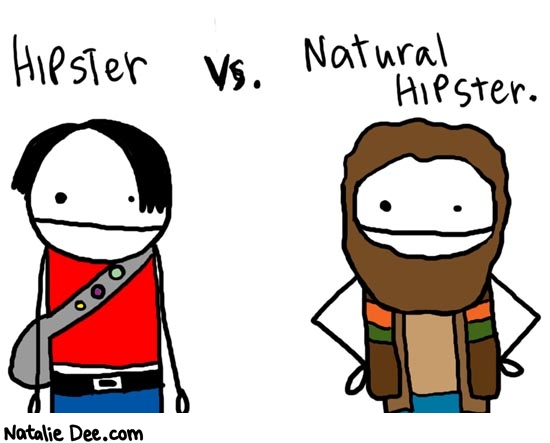
Clearly, New York has some very fashionable people (I've even spied some harem pants of late: mais oui!), but if you speak to any of them - which I often do, in my line of work - they tend to be European. The Americans try and copy, but just don't get it. The hipsters - fedora hats, canvas shoes, capri pants, stupid, lo-fidelity headphones and badly-tuned guitars - are the worst, because they're obviously trying really hard.


In truth, New York is tolerable. But dare to venture out into New England or Jersey, and God help you. New York is a sort of halfway house - a safe haven for any would-be European visitor to start with. Like the little coves you practice windsurfing in, it helps those a little wet behind the ears to adjust. From there, they can make little weekend trips into the open ocean of sartorial carnage, so that the tsunamis of middle America don't immediately get them. One denim jeans-denim jacket combo is one thing, but try being faced by a hundred of them at once.

The whole thing is exacerbated by the obscene, graphic obesity everywhere you look. If you think a t-shirt bearing the logo of a fake girder company and it's fake date of incorporation printed faintly so as to add an air of Retro Charm is unspeakably horrendous, wait 'til you've seen it stretched hopefully, vainly over three hundred pounds of prime Yanksteak.


None of this bothers me terribly - as cultural omissions go, well-tailored trousers I can deal with. It just adds an old-fashioned air to the whole place, taken with everything else. Prices are a little cheaper, the clothes are a little 90s, the music is mostly pre-teen. They are still arguing about gay marriage. It's Europe, five years ago. Except there aren't any jobs.

P.S. Thought I should drop in a link to America's sartorial Bible: People of WalMart.

Thursday, 12 August 2010

#28 Brotherly LOVE.


Oh we do like Philly, very much. I was clueless before I arrived. It's a bit of a non-entity to non-Americans (at least to me): after New York, LA and DC, I jump straight to 'Other'. I can report that it is both lovely and important, like Michelle Obama.

Philadelphia used to be the capital of the US, did you know that? Well now you do. 1790-1800, which puts it in that Lady Jane Grey category of important-for-pub-quizzes-if-nothing-else. (What the Philly tourist literature doesn't tell you is that this was just because it took a little while to build DC.)

But wait; there's more. The Declaration of Independence and the US Constitution were both written and signed in Philly. That puts it alongside Runnymede as probably the most important place in Western law and politics.

Let's not forget the oldest continuously inhabited street in America, Elfreth's Alley, or a truly spectacular Museum of Art that ticks three of my four art museum boxes - well-lit, lots to read, and few children. (#4 is donation only/free, and almost always adversely affects the other three.)

More, you say? Mais oui! Philly has the largest city park in America - Fairmount Park. Which is, truth be told, a little flat and boring (Prospect Park - now there's a park!) And it houses the Liberty Bell, an international symbol of freedom that is a total con (it was silent during the signing and public reading of the Declaration of Independence, fact fans). Oh, and it is the home of a mediocre steak sandwich - the Philly Cheese Steak. And a series of mediocre Sylvester Stallone films. I could go on.

If in that last paragraph you thought I sounded a little down on Philly, you misunderstood - I'm down on what people like about Philly. It's a city of peerless charm - fascinating history, wide open spaces, sleepy streets. The perfect antidote to New York. Its artistic haunts are full not of posers and hipsters but of artists and observers. It is unpretentious about its historical import, the majesty of its attractions. It has some beautiful architecture - especially the Victorian revival architecture of UPenn. (Another mention should go out to UPenn's daunting Archaeology and Anthropology Museum, actually.)

But the best bit of all is the downtown layout. Seriously. It is an exercise in pleasing geometry - four equal quarters, divided by two huge boulevards originating from City Hall. Two subway lines each run along one of these boulevards. Streets are numbered away from the centre. Precise, simple, beautiful. It is where Da Vinci would have lived, if he was born a little later. The Vitruvian city.

Thursday, 5 August 2010

#27 Pilgrims' progress.


The Mayflower, bearer of New England's first permanent settlers.

America has come a long way. Really, it isn't said enough. She is the country we love to loathe, with her isolationist sensibilities and nutritional eccentricities, her paradoxical mix of I'm-free-so-fuck-you liberalism and prudish conservatism. A country more advanced than any, determined to revert to the Stone Age.

But in 400 years, the European settlers of what we now call America have thrashed out a nation that (let's face it) leads the world. And, on a good day, she leads the world based on laudable principles of egalitarianism and freedom. She is rich. She is pretty. She is spacious, technologically-advanced, and possessing of Froot Loops. Hasn't she done well?

Over the last few days, then, I have explored the genesis of this sometimes dumb, usually arrogant and occasionally marvellous nation. I have been through her underwear drawer and her baby photos. And all to present to you a potted history of a girl named America.

Massachusetts numberplates proudly boast of 'The Spirit of America'. It is, to many, the state that epitomizes everything that America should be. Here the colonists finally learned how to get on with the native Indians, and broke bread with them in a universal Thanksgiving. Here the British tyranny was first routed, and a nation more democratic than any the world had seen was born. Here natural resources are exploited way past breaking point, and sports teams are the best on earth. Here science is shoved violently forward beyond its furthest frontiers, clams are stuffed with deliciousness, and cities are all but unnavigable.

In 1620, the Wampanoag Indians experienced a shock. The shock was probably smaller than your history teacher led you to believe - after all, Basque and Scandinavian fishermen had regularly been visiting Cape Cod, the Wampanoag's homeland, for hundreds of years. The white man came again, but this time he intended to stay. (Actually, they'd already come to stay, in 1607, to Virginia; but the story of the Plymouth Brethren is so much more romantic.)

The white man arrived in winter, poorly provisioned, unfamiliar with the terrain, and largely clueless on the topic of subsistence farming. The Wampanoag helped the colonists through their first winter, fed them turkey, and forever cursed their decision. Waves and waves of further colonists came - 20,000 by 1630, all along the Eastern seaboard - and America was born.

These first New Englanders landed on Cape Cod at Provincetown, on the far northern tip. 102 of them - Protestants, seeking the freedom to follow their devout faith awa from the meddling of Catholic King James - set out, and by the end of their first winter - despite the Wampanoag's intervention - half of them had perished.

By 1627, these survivors had settled in the already-charted town of Plimouth, on the Massachusetts mainland. If you visit Plimouth (and I hazard you should), you can see the rock marking their landing point. It is very dull, in a typically rock-like way. It is brown-gray. It is large. Someone has thoughtfully carved '1620' into it. It is surrounded by a gaudy Neo-Classical pavilion, altogether out of kilter with the uninteresting object it shelters.

Plimouth's far superior Colony-related attraction is the Plimouth Plantation, a village compromising both a mock up of the Colonists' village, and of a Wampanoag one. There are players in dress (well, in the Wampanoag village, there are Native Americans from various Nations), dubious West Country accents, and a lot of fun to be had.

Most of my time in Massachusetts was spent on Cape Cod. It is a huge promontory into the Atlantic - actually, it's been a huge island in the Atlantic since the Cape Cod Canal cut it from the rest of Massachusetts in 1914. Anyway, historically it was full of sea captains, windmills and teeming fish. Now its full of windmills and tourists. There are lots of dead fish on dinner plates, but the fish stocks offshore are severely depleted. There may still be sea captains, in fairness. I don't really know what a sea captain looks like. I have a vague pastiche of Captain Birdseye and Adam Ant in my head; I didn't see anyone quite like that. The tourists came to see the sea captains, fish and windmills, so are generally two-thirds disappointed.

I liked it, a lot. I've always liked places with a jaunty nautical air, and this nautical air was pretty much vertical. They served decent tea (New England is clearly more than just a name), the Indian place names were frankly unmatched (case in point: Mashpee), and everything smelled deliciously salty. I ate lots of taffy and quahogs (somewhere between toffee and boiled sweets; stuffed clams). The art in the galleries was shit ('Oh, you decided to paint a fishing boat in an orange-and-blue palette; truly you are an artist of unprecedented vision and depth!'), but you can't have everything.

I mentioned the Cape was full of tourists, but really, I hadn't seen anything yet. Off the coast of the Cape (that's off the coast of off the coast of Massachusetts, for those who are counting), lies the real tourist trap: Martha's Vineyard.

Martha's Vineyard is a place so romanticized that you sound like a dick whatever you say about it. Have you ever heard people talk about Paris? They either say how beautiful it is, and you think they're pretentious or generic, or they say how much they dislike it, and you think they're an idiot. Or, again, pretentious. You can't win.

Martha's Vineyard is sort of the same. It's clearly very pretty - beautiful, even - but sullied. That's not just in a everyone-and-his-dog-has-been-there-so-I-can't-like-it sense. They've actually ruined it. the shore, at least for several miles either side of the major towns, has been entirely sold off to private buyers at vast expense. You can't walk along it, or even see the sea, most of the time. The towns are of the sinister, soulless sort you find in major malls - a faux-village, painstakingly rendered quaint and quirky and - dare I say it again - jaunty. Except it doesn't work, because everything is twice the price it would be if the quaintness were genuine, and which real sleepy seaside town has a coffee shop and sells fuchsia capri pants? You can't put your finger on what's wrong; it's just slightly sinister. Like John Redwood.

Provincetown (which, as I mentioned before, was the Pilgrims' first landing place - gold star at the back!) has a secret. It's not really a secret, it was just unknown to me. It is New England's Brighton: a lovely seaside place with lots of nice oyster bars and sunburnt pensioners and a massive, incongruous gay community. Realising you're in a gay town slowly is wonderful. It felt very similar to the night in Casablanca during which I realised the 'restaurant' I was in was in fact a brothel: a mingling of discomfort, blushing aren't-I-foolish-ness, joy at all the bright colours and exposed skin, and from there on out an insatiable desire to stare at absolutely everybody. I'm sorry; I led a sheltered childhood. But it was fabulous. The Plymouth Colonists must be turning in their graves.

Monday, 26 July 2010

#26 It's not all Smucker's and roses.


I don't want you to get the idea that I love this country. I like this country. A lot. I like Krispy Kremes and silly stop-start sports and pretty women with pretty accents and the movies and the predominance of the colour yellow. Well, I guess the last one is really just New York. But still. I like it.

But I don't love it. There is a lot that I really don't like. Here is a nonexhaustive list of bĂȘte noires, which I will add to in comments whenever I come across more/have had a bad day:

1. The whole point of America to me is right there in the Declaration of Independence: all men are created equal. Clearly this is something that everyone can sign up to. Indeed, most Americans purport to. Now I'm not going to write a whiny left-wing rant about the betrayal of these egalitarian values (if you're interested, look up anything else I've ever written); but I am going to moan about how every American tries desperately to pretend that he isn't American. "I'm Italian". No you're not. "I'm Irish". No you're not. "I'm African". So is everyone, dickhead. JESUS. (He wasn't American, incidentally.)

2. How hard is it, pray tell, to calculate the tax levied on a particular product or service, and add it to the bill? Why do businesses confined to New York still not show tax? They never sell their product with any amount of tax other than that levied by New York City and State. So why not let us in on the secret? And chains tend to charge more in New York, anyway. So not including sales tax on the price tickets isn't saving them any time. It's just infuriating consumers and generating awkward amounts of change of which you can't rid yourself. Who wants to hold up a queue counting cents whilst the cashier glares at you? The homeless of Manhattan would be screwed if shops showed tax on price tags, because people would actually bother to spend their change.

3. Stop wearing sneakers. They are not acceptable work wear. And, if you've chosen to wear black trousers (despite the fact that it's ninety fucking degrees out), please deign to wear black shoes. You wouldn't want to look like a fucking dishevelled cretin now, would you?

4. Whilst we're on the subject of clothes: Yankees caps. I want to see into the mind of any of the two million New Yorkers who has walked into a sporting goods store and thought: "You know what would make me look cool, distinctive and unique: a Yankees cap! Truly I will stand out as both an individual and a discerning sports fan. By allying myself with the most successful franchise in any sport's history, I will subtly induce a halo effect. Passers by will notice my affiliation and determine that I am successful, ruth-less (see what I did there? I'm quite proud of that joke) and unstoppable, in life as in sport. On and off the field, this symbol of sporting prowess will invoke fear and respect. Who cares if I haven't been to a home game in two years, and actually last month I went to see the Mets because it's cheaper?"

More to follow.

Wednesday, 21 July 2010

#25 Run this town.


Central Park, May 2010

Michael R. Bloomberg, the esteemed Mayor of this city, has famously pledged that no New Yorker will live more than 10 blocks from a park by the end of his tenure. Well, the boy's done good. New York is bursting with green spaces. Admittedly, some of them are a little small. Hell, many of them make your average village green look like Yellowstone. But they are there, and they are public, and they're fab for a spot of lunch.

I live four blocks from Central Park, the grandaddy of New York's parks, and two blocks from the terrapin-infested Morningside Park. I'm Bloomberg's publicist's wet dream. Anyway, since I'm cheap and city parks are free, I tend to use them to their fullest.

It's a strange park, Central Park. Bizarrely large for an island so chronically short of space, you feel slightly guilty using it. Does New York really need it? I'm all for green spaces, but I bet real estate prices would be a bit lower if Central Park didn't exist. And getting across town would be easier. And there would be less tourists. And John Lennon memorials. And overpriced hot dogs. And surely it's not a very green green space? If Central Park were razed, less people would have to commute from Brooklyn to Manhattan, so there would be energy savings. I bet they use a sickening amount of water irrigating it.

Anyway, I'm quite a keen runner, if you didn't know. The four runs per week of my youth have ebbed to one or two, in truth, but I'm still out there pounding the pavement with reasonable frequency.

I generally run alone, in the countryside, passing maybe one or two people in an hour. I run like Paris Hilton after an oestrogen injection. Not slowly, you understand - for someone of my build, I'm pretty nippy - just in an hilarious, let's-get-a-photo-of-this-mincing-idiot style. Central Park is to running what the hajj to Mecca is to Islam. So colour me a little self-conscious.

The saving grace for my ego is that Americans run slowly. I don't know why. I overtake almost everybody; people skinnier than me, with better trainers, who never ever smoke and don't fiddle with their iPods continuously. It's like everyone has been hypnotised and/or sodomized by Richard Simmons. I ran the length of Park Drive the other day, passing maybe 500 people, and no one overtook me. It's bizarre and gratifying and ego-boosting and unnerving all at once. Is there a speed limit no one told me about? Maybe they're concerned about waking Yoko Ono, or the zoo animals? (I'm leaving the obvious joke unmade here.)