Showing posts with label NYC. Show all posts

Tuesday, 17 August 2010

#29 Fashion worth fighting for.

In the 1957 movie 'Funny Face', Audrey Hepburn plays a downtrodden but educated woman who works in a bookstore; plain and dowdy. Her life is transformed when Dick Avery, a hot fashion photographer, decides she is to be the new face of Quality magazine, and, suddenly, she becomes the bleeding edge of fashionable.


I can empathise. Hepburn's experience is not unlike that which any European will has upon arrival in America. Because America, as a nation, is sartorially retarded. It is a wasteland. I've been to better-dressed homeless shelters.

Now, I'm not an individual overly concerned with fashion: I normally wear t-shirts and jeans, I have silly-coloured socks. My shirts - pure cotton though they may be - are unimaginatively plain and pinstriped, in a lazy, preppy sort of way. I do possess - and I admit this with great reticence - t-shirts with beer company logos on them. That's t-shirts. Plural. All in all, I'm no Kate Moss.

But I look decent. I don't wear white sports socks with a black suit. I don't wear shorts to restaurants. I don't own a fanny pack. I don't wear running shoes to work. I believe fedora hats had their day in the early 20th century. In fact, even a day was pushing it. (Oh, and by the way, it is customary in civilised countries to remove your hat inside. Cunts.)

Furthermore, I believe bermuda shorts to be a beach clothing item. You've already heard my opinions on baseball caps. Don't even get me started on wedding attire ("Congratulations, you looked like a complete twat on the most important day of your life").

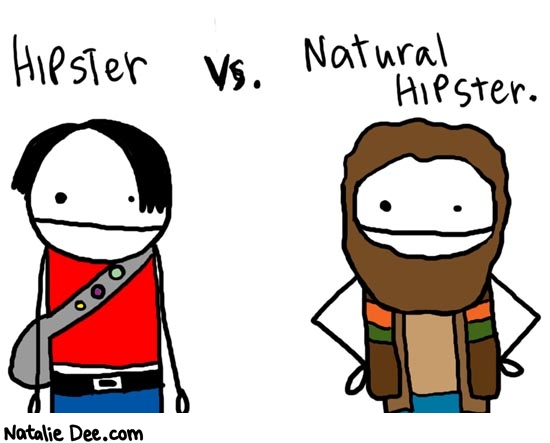
Clearly, New York has some very fashionable people (I've even spied some harem pants of late: mais oui!), but if you speak to any of them - which I often do, in my line of work - they tend to be European. The Americans try and copy, but just don't get it. The hipsters - fedora hats, canvas shoes, capri pants, stupid, lo-fidelity headphones and badly-tuned guitars - are the worst, because they're obviously trying really hard.

In truth, New York is tolerable. But dare to venture out into New England or Jersey, and God help you. New York is a sort of halfway house - a safe haven for any would-be European visitor to start with. Like the little coves you practice windsurfing in, it helps those a little wet behind the ears to adjust. From there, they can make little weekend trips into the open ocean of sartorial carnage, so that the tsunamis of middle America don't immediately get them. One denim jeans-denim jacket combo is one thing, but try being faced by a hundred of them at once.

The whole thing is exacerbated by the obscene, graphic obesity everywhere you look. If you think a t-shirt bearing the logo of a fake girder company and it's fake date of incorporation printed faintly so as to add an air of Retro Charm is unspeakably horrendous, wait 'til you've seen it stretched hopefully, vainly over three hundred pounds of prime Yanksteak.


None of this bothers me terribly - as cultural omissions go, well-tailored trousers I can deal with. It just adds an old-fashioned air to the whole place, taken with everything else. Prices are a little cheaper, the clothes are a little 90s, the music is mostly pre-teen. They are still arguing about gay marriage. It's Europe, five years ago. Except there aren't any jobs.

P.S. Thought I should drop in a link to America's sartorial Bible: People of WalMart.

Tuesday, 6 July 2010

#23 Baked apple.


Coney Island, Fourth of July

Contrary to what you might expect, human beings don't burn. They melt, slowly, into syrupy nothingness. New York and everyone in it is gradually dissolving. The sky is a ball of haze, and the iced coffee is running out. The once-sharp outlines of the people of New York are now all wibbly, so that I'm not sure where one ends and another begins. Heed my warning, people: the apple has been baked. Please send iced coffee. Or maybe iced coffins.

Wednesday, 9 June 2010

#17 Love me chicken tender.


Popeye's Chicken and Biscuits, a major Louisiana-based fast food chain, serve up rafts of the fried chicken so beloved of Americans (and especially the African American community). As greasy disgustingness goes, it's far better than KFC, not least because I can chalk it up as a necessary cultural experience, whereas I can go to KFC in my hometown in Cheshire.

They serve their chicken with 'biscuits', in what has proven to be the most taxing of my linguistic hurdles so far. American biscuits are similar to what we would call savoury scones - doughy and buttery - and are traditonally served with other Southern fare, particularly chicken. They are lovely, but complete decadent madness as a filler - the potato dauphinoise of breads. I've become something of a Biscuit Monster (see what I did there?) since moving here.

Unrelatedly, Dave asked me to expand on the culinary delights of Chinatown. The place we went to together was lent an air of authenticity by us being the only white people there (out of maybe 100), and the presence of the following menu items:

- Jelly fish (cold)
- Jelly fish head (cold)
- Shark fin soup
- Fish maw (that's swim bladder to the rest of us; yeah, I'm totally going to eat something referred to as a 'bladder')
- Salt and pepper duck intestines
- Frog twin flavor

(Incidentally: no, I wouldn't have eaten there if I'd realised they served shark fin soup before we'd already ordered other stuff.)

We plumbed for the latter (well, Dave did; I bought something much more tedious/sensible), and were treated to...bones, mostly. The thimbleful of meat we had tasted a lot like chicken. Except when we ate it we turned into princes.


Popeye's biscuits.

Sunday, 30 May 2010

#15 Sodom by the Sea.

Here's a fact for you: Blackpool has more visitors every year than Greece. Our rapacity for relentless cheesy awful is astounding. Coney Island, at the far frontier of Brooklyn, is New York's attempt to fill this need. You can entertain yourself on the Coney Island Cyclone - one of the few historic wooden rollercoasters still in existence (it was built in 1927) - play slots, dodgems and arcade games, eat fried chicken and ice cream, and lark around on the beach.


The boardwalk at Coney Island.

Recently, like everywhere in Brooklyn, Coney Island has become something of a gentrified shadow of it's former gritty glory; in 1893, the New York times dubbed Coney Island 'Sodom by the Sea', and matters didn't improve for another century. The Island's present-day claims to fame include its Mardi Gras Mermaid Parade, and the World Hot Dog Eating Championships, which Nathan's Famous hosts every Independence Day, drawing some 30,000 live spectators and several million ESPN TV viewers. (I will of course be in attendance avec camera this year, so watch this space to see if last year's record of 68 dogs in 10 minutes tumbles.)

And that's all, really. I can confirm it is a grand day out.


Sunday, 23 May 2010

#13 I live in Brooklyn. By choice.


The Williamsburg Bridge and Lower Manhattan from DUMBO

The title - a Truman Capote quote - alludes to Brooklyn's hard-edged past. Recent past, really. Even in the early 90s, the old Dutch township of Breukelen was mostly a no-go area for Manhattanites. Times have changed. The relentless gentrification of even the grittiest corners of Manhattan (the Meatpacking district, the Bowery, Alphabet City, Harlem) has forced many modestly wealthy city folks across the East River.

They weren't all pushed, mind; many jumped. Brooklyn is attractive for all kinds of reasons - big living spaces (relative to Manhattan), a rich cultural heritage (the aforementioned Truman Capote, Woody Allen, Benjamin Britten, Aaron Copland, Jay-Z and Notorious B.I.G. have all called these hallowed streets home), some stunning museums and parks, breathtaking views of Manhattan, and top notch transport links. Oh, and no tourists.

The clincher, though, is Brooklyn's delivery on the melting pot dream - Hassidic Jews, Muslim and Christian African-Americans, Eastern European emigrants and Hispanics from all over South America live cheek by jowl. It feels how you imagine New York should feel.

Anyway, I too have now joined this...well, let's surrender to literary cliché and call it a 'tapestry'; it is more pertinent here than generally. For the next couple of months I'm living in a hostel in Bedford-Stuyvesant, about five minutes walk from where Jay-Z was born. (Did I mention I fucking love Jay-Z?) 'Bed-Stuy' suffers something of a hangover from its very bloody gangland past ('Bed-Stuy: Do or Die', as the saying goes), but is actually a beautiful place to live, with airy parks and wide, sleepy streets. I'm sharing a room with many sweaty traveler sorts in a feast of Bohemina bonhomie, drinking copiously, eating poorly, and washing rarely.


Mural in Bedford-Stuyvesant

Wednesday, 14 April 2010

#8 Burn in the USA.

It's April. I can't stress this enough. April. I think lambs, trench coats, and crisp sunny mornings. Boiled eggs and soldiers for breakfast. Maybe the odd cold salad for lunch. On a good day.

In no way does 30C (that's about 87F in local-speak) heat square with this ideal. Now, like most British people, I have experienced 30C heat - not in April, I hastened to add - only on holiday, when I am suitably disposed to cope with it, by doing sod all, drinking copiously and larking about in fountains. That's all well and good. 30C is fine then. Hell, it hit a heady 56C (130F) when I was in the Sahara. (Did you know that above 55C your eyeballs melt almost instantly?)

Imagine, then, my frank consternation this week, as New York City experienced the most objectionably hot April it has ever experienced. Oh how I clung to the shadows, and turned up the air conditioning!

Saturday, 10 April 2010

#7 Meet you in Manhattan.


This week I met two astonishing men (neither of which were Vladimir Putin). My studio hosts occasional seminars for professional photographers, and there was such an event this Wednesday.

First up was Dr. Stanley Burns, owner of the most celebrated private photographic archive in America. His Upper West Side digs house some 700,000 photographs of historical importance.

I cannot understate how much importance. He showed us the only surviving photograph of the 20,000 strong crowd watching America's last public hanging. He showed us a huge collection of Holocaust imagery, from albums of SS soldiers showing men having their beards shaved, to a Parisian serial killer who ensnared victims on the promise of providing safe passage to America. He has an astonishing collection of medical imagery - the first corneal graft, the first open brain surgery under local anaesthetic, and so on.

At the lecture he showed a lot of images which have yet to be shown anywhere. A major exhibition on the history of the American civil rights movement, for example, will go ahead at the Met in 2012.

Corbis, the US image library, apparently offered his $30 million for the collection a couple of years ago. Anyway, should your interest be piqued, you can read more at .

Next up was a British photographer called Platon, most famous for his portraits of world leaders. Why the one word moniker, I do not know. Not a lot to say, other than that his work is fabulous, and you should check it out here: .

He was original skyrocketed to fame by the photograph of Putin above, which featured on the cover of time, and won first prize at the World Press Photo competition.

Sunday, 4 April 2010

#6 Culture vulture.

If the Brooklyn Museum were a woman, I would marry her in a heartbeat.

Now, New York is not short of high-minded attractions. The casual visitor is somewhat spoilt for choice. There is Broadway. There is the city ballet and opera. The Met. The MoMA. The Cloisters. The Guggenheim. The aforementioned visitor would be forgiven for not rushing off to Brooklyn to go to another beaux arts museum.

Do.

Really, do.

It's wonderful. The collections, of course, cannot match the Met in importance or range (though within the realms of African and Asian artifacts, the Brooklyn Museum is world class). That's not the point. The exhibitions are beautifully curated. The exhibits are well-lit, the signs printed in readable, serifed fonts. They are arranged so that the cloud-pleasing stuff that everyone visits (the special exhibitions - currently on Egyptian mummification - and the African anthropological collections, since this is Brooklyn) are close to the doors. The quirkier stuff - fabulous collections of Islamic and Buddhist art, for example - are squirreled away, and quiet.

I could go on, so I will. There are activity books and pencils for kids to do with their parents (my favourite: choosing your Egyptian burial artifacts on a budget). There are desks with copies of all the exhibition books to read, so you could learn more about any exhibits you were particularly interested in. Can you imagine the Tate letting you read the books it wants you to spend 40 pounds on? The shop actually had nice stuff in it. Oh, and the whole museum is set in the most beautiful cherry garden, so you can head outside and indulge in some hanami if you get bored.

Best of all, however, is the Target First Saturdays programme. After 5pm on the first Saturday of each month, museum admission is free, and a range of cultural events are put on. These events are themed around the special exhibitions, so this month it was Egyptian burial.

It wasn't quite as macabre as it sounds, since it was interpreted fairly loosely. In the foyer was traditional Egyptian music, along with a cheap bar. There were ticketed 'Meet the Curators' talks, and round tables held by students from local universities. I personally plumbed for a free screening of an arthouse film about burial rituals in Japan (again, less macabre than it sounds; Departures, if you're interested). Afterwards, I could have gone to a dance party in the center of the European beaux arts hall hosted by some specially-flown-in Egyptian DJs, and got my groove on about 10 yards away from some original Monet, Matisse and Cezanne paintings, if I'd fancied it.

The museum was brimming with a range of very un-museum-ish people, and I feel as though the Brooklyn Museum is more serious about its public service remit than any museum I've ever been to.

Please go.

Thursday, 1 April 2010

#5 I'm leaving.

Nah, just kidding. April fooling and all that. I thought, for once, I'd actually write about photography.

I started work a week ago now. This week there were two big projects. Firstly, we photographed some kiddywinks as part of the 'Growing Up Project'. The idea is to document childhood by photographing a cohort of children once a year. Some of them came under the spotlight when they were bumps (literally: Howard has done a series of pregnancy studies), and have stayed there for a decade or more. You can see some of the pictures here.

Secondly, we photographed a young gentleman by the name of Greg Jones for the good people at ESPN Magazine. He is a man of terrifying proportions: 255 pounds, 6'1", with a wild tangle of dreadlocks. He has just signed an $18 million contract for the next few years, apparently. He was chosen for this feature because he is exquisitely muscled. G-dawg (I didn't call him this to his face very much) had none of the swagger that you might expect such potency and wealth would afford you; he was modest. Meek. Sheepish. Pliant.

Anyway, it was all very cool, not least the fantastic breakfast and lunch spreads that come with client work. Let us hope Howard abandons all this fine art shit and carries on photographing athletes and actors.

Sunday, 28 March 2010

#4 Mad men.

British advertising just isn't as good as Madison Avenue's finest. Often it is the charming bluntness, like the huge billboards for '$399 DIVORCE'. It is advertising unfettered by British reserve.

The Staten Island ferry, my commuter vehicle de rigeur, is festooned with ads for the Staten Island Radiology Oncology Center, the main selling point being that they are based on the island you're heading to. Why travel for an hour or two to get your potentially fatal illness treated, when you can hop straight off the ferry into a clinic? 'Why' indeed.

Of course, the Staten Island Radiology Oncology Center are wasting half their money, since the afflicted travelling towards Manhattan also see the ads. Presumably they walk right into the convenient, welcoming arms of Manhattan's oncology doctors. And die.

Often the highlight is just the phone number. A low-budget criminal defense firm currently advertises on the Subway. Anyone who has ever watched any American TV knows you have the right to one phone call upon arrest. Shouldn't yours be to 1-800-INNOCENT?

Tuesday, 23 March 2010

#3 Bagel bagel bagel, I made you out of bread.

In the last post on diversity, I plain overlooked some two million - a quarter - of New York's inhabitants. The city houses by far the largest Jewish population outside Israel. (In fact, it isn't far off Tel Aviv, with 2.6 million Jews.)

Walking around most New York neighborhoods, this figure seems incredible. Of course, not every Jew wears a bekishe cloak and sideburns, but still. The reason is, of course, that much of the Jewish population is poor and slum-bound.

I went to Brooklyn for the first time today. To the west of Manhattan, Brooklyn is what many consider 'pure New York', with an incredibly rich cultural heritage. Bedford-Stuyvesant is the cradle of East Coast African-American culture - such luminaries at Jay-Z and the late Notorious B.I.G. have called it home. North Williamsburg is home to New York's richest art and music scene, following the gentrification of south Manhattan (though it is going the same way). And South Williamsburg, to go back to my original point, is home to a massive community of hasidic Jews.

I took a long walk through these neighborhoods this morning. For maybe half an hour I didn't see another pedestrian, delivery boys and postal workers excepted, who wasn't wearing hasidic clothing. I found it slightly disconcerting. No where else have I been confronted with such uniformity - or such ambivalence. Not one of the hundreds of people I walked past met my eye. The racial uniformity is also striking; the ambiguity in English between the Jewish faith and the Jewish race is telling.

Hasidic Judaism is an ultra-orthodox sect, and will, like all orthodox religion, seem hostile to outsiders. I am not trying to make a point here. But it is fascinating that such a massive community of such distinctive people can be so invisible.

I might be moving to North Williamsburg soon, incidentally; watch this space. Before I left, I picked up a bag of my absolute favourite Jewish things: BAGELS!

Photo is from The Gothamist, just to illustrate hasidic dress.

Sunday, 21 March 2010

#2 The melting pot.

It's easy to forget quite how diverse America is. Sure, there are black sports and music stars, but we have those in Britain, too - and we're still over 90% white European. Black people are just better at music and sports. By contrast, a third of Americans are non-white - mostly black (12%) and Latino (15%). There are nearly as many Latino Americans as Britons, total.

Nowhere is this diversity more evident than in Queens, one of New York's five boroughs. Nearly half the population was born beyond these fare shores, and over 200 nationalities are represented. It is the most diverse urban area in the world.

America's attitudes towards race are confused. Historically, this country has been exceptionally welcoming to pretty much anybody. Europeans of all nationalities and ethnicities arrived in their millions at East Coast immigration centres - most famously Ellis Island, New York - in the early 20th Century, and barring major sickness piled in. African Americans, of course, arrived initially against their will, but have since made this country their own.

Mexicans were sent as cheap labour with the complicity of their government from 1907 onwards, following the cessation of Japanese immigration which till then had fulfilled a similar purpose. (The end of Japanese immigration, incidentally, was brought by Californian nativism - so later clampdowns on Mexicans moving into the state is just history repeating itself.)

Throughout all of this, middle America has rumbled with strong nationalist overtones, waxing and waning according to economic circumstance and unemployment rates. So it is in any country. But, of course, this is a nation borne of immigrants, Native Americans excepted. It has coaxed and cajoled foreigners repeatedly, and benefited hugely from their cheap labour. Its constitution is uncompromisingly liberal and secular. Nothing is expected of or promised to anyone, except freedom.

I would be setting up a false dichotomy, if different people had these different attitudes. No nation can be expected to sing as one, nor should it. But this pride in America and all that it supposedly represents - the republican ideals of 'liberté' and 'égalité', if not 'fraternité' - is held by the very same souls who decry the influx of undesirable foreigners. Again, this hypocrisy is not uniquely American - just especially acute here.

Walking around this city, then, and reeling from its diversity, brings high-minded musings about why this country is as it is. I wrote before I left about the the adult American dream is over. Well, maybe for a cynic like me, but not for most. Not for the millions who have come, and will continue to come, to fill Queens, Brooklyn, and the already-brimming melting pot.

In that context, here's an interesting fact: an African American male in the United States is more likely to end up in prison than college.

Cartoon from Punch magazine

Saturday, 20 March 2010

#1 Double Dutch.

In 1664, the minor Dutch colony of New Amsterdam was given to the British, in return for a far more valuable, if less accessible, prize: the Banda Islands, a small archipelago of ten islands, 2,000km east of Java.

The Banda Islands - and most famously Run - were the only place in the world where the nutmeg tree grew. In the 17th Century, nutmeg was the most valuable commodity in the world. Two nuts would secure a man's fortune for life on the London markets. A ship at Run could quite quickly fill its hull with tonnes of the stuff; the problem was getting it back.

Besides the general perils of early navigation - storms, scurvy and tropical diseases - the East India Companies of Western Europe fought bloody battles along their trade routes. Boats were ransacked, scuttled and stolen. The bitterest rivalry of the 17th Century was that between the British and the Dutch...but I digress. It's a fascinating story, laid out in gory and jingoistic detail in 'Nathaniel's Nutmeg'; that rarest of books on colonial history, in that the Brits end up looking like the good guys.

Run fell into obscurity with the cultivation of nutmeg elsewhere during the Napoleonic Wars, but New Amsterdam - renamed New York - did not.

I was put in mind of all this by my transfer at Amsterdam en route to New York two days ago. So, I'm finally here! Over the previous weeks and months I had poured over books and websites, planning - accommodation, transport, visas, how on earth I was going to meet people, how on earth I was going to understand people, what on earth I was going to do without my dog, and so on. I have a new-found respect for people who do three-year degrees abroad. How the hell do you manage?

I'm still pretty discombobulated. I'm living on Staten Island, as mentioned, but it's a hella long way out, and my new boss has already said to me I should try and find somewhere more accessible. I went into my first department store today - sweet Jesus they are terrifying. I got a US phone, which doesn't seem to work properly. Ho hum.

The studio is in SoHo - 'South of Houston Street', part of New York's wonderful literal geographical naming system. Many neighborhoods follow a similar pattern: TriBeCa is 'Triangle Below Canal Street', NoLita 'North of Little Italy', and so forth. Coupled with the regular grid road system (with road signs at every block), it all seems almost German in its calming order and logic.

It breaks down below ground. The Subway was designed by someone who, here's hoping, is suffering in hell. Lines are sort-of colour-coded, but in groups which branch into the outer boroughs and neighborhoods. Rather than distinctive names or colours, they have line letters or numbers (1,2,3,J,W,etc.), which are easily confusable with station and street names. There are express trains and local trains, and no one seems to know which is which. The announcements are made, not by a clear pre-recorded voice, but by a hassled driver, so finding your way depends critically on where he hails from, and how strong his accent is. (Mercifully, there is one driver who, if he isn't from Manchester, watches too much Corrie. But my chances of always getting him seem slim.) Oh, finally, there are no maps anywhere in the stations - only on the train.

The whole system makes sense, no doubt, for commuters, who are making regular, long journeys from the suburbs downtown on converging trajectories, and know exactly where to go. For tourists, it is hilariously bad. In London, it probably wouldn't matter - above ground the city is awful for tourists too, with few road signs, confusing tangles of streets, and constant traffic jams. It would fit right in. In New York, a city in so many other ways made for tourists, it sticks out like a sore thumb.

Wednesday, 10 March 2010

#0 The American dream.

I first went to America when I was seven. Modern media may have eroded the adult American Dream, but for a seven-year-old it is alive and well - Disney World, impossibly large milkshakes, bright colours and loud noises.

The attraction this time round is pretty much the same, to be honest, though I've replaced Disney World with SoHo, New York's artistic quarter. I will be working for a year at the Schatz-Ornstein Studio, owned by Howard Schatz, one of America's most eminent fine art photographers. I will be drinking impossibly large milkshakes. And I will be living in the Ganas Community on Staten Island, in an attempt to experience a qualitatively different way of life. Well, honestly, it's more because the rents are lower than Fergie's Apple Bottoms, but hopefully it will broaden my narrow Cantabrigian horizons a little, too.

Because I like sharing these things, and have taken a shine to journalism recently, I will be documenting my experiences here as 'Lettuce From America', a none-too-subtle homage to that great transatlantic correspondent, Alastair Cooke. Lettuce From America will include all manner of inane prattle and media content, like all the best blogs.

I shan't lie, I'm scared. First there was the revelation that Americans don't drink tea; then the bombshell that they don't own electric kettles. If that weren't enough, I've just been told their light switches are the other way up. Clearly these are a people I will have to be very cautious of.

In spite of my reservations, I will be leaving in a week.

Sam


P.S. For those of you who don't know me, I'm a 21-year-old would-be photographer from Manchester, England. Other interests include psychology (my degree subject), politics (I post on The Guardian's 'Comment is Free' site as samuelpalin, if you're ever over that way), and many other far less cerebral things.

Images are © Howard Schatz